


Building a Better Bed: Converting a Ford Dentside Longbed into a Shortbed with AMD
Building a Better Bed: Converting a Ford Dentside Longbed into a Shortbed with AMD
When it comes to classic truck restoration, few debates are as common as longbed versus shortbed. From a practical standpoint, the longbed Ford pickup delivers better hauling capability and a smoother ride. But visually, the shortbed Dentside trucks—especially the 1973–1979 Ford F-100—have a stance and proportion that enthusiasts can’t ignore.
In the latest issue of Classic Truck Performance, AMD Brand Ambassador Kevin Tetz teams up with PaintucationU.com and Eastwood to tackle this exact challenge. The result is a real-world, shop-tested guide to transforming a longbed Ford into a clean, functional shortbed using premium automotive restoration parts and classic truck body panels from Auto Metal Direct.

CLICK HERE FOR FULL HOW-TO ARTICLE IN CLASSIC TRUCK PERFORMANCE
Why the Ford Dentside Platform Still Dominates
The 1973–1979 Ford F-100—better known as the “Dentside”—remains one of the most popular platforms in the classic truck world. Clean originals are getting harder to find, especially shortbeds, which continue to bring higher prices in today’s market.
That’s why this approach makes so much sense: start with a more affordable longbed truck and convert it using high-quality F100 replacement parts. It’s a strategy that opens the door for more builders to get into the hobby without compromising on the final look.
Starting with the Right Foundation
This project began with a longbed Ford pickup owned by Chris Slee of Kiwi Classics and Customs. Like many shop trucks, it wasn’t originally intended to become a full feature build—but the potential was there.
After addressing typical rust areas with AMD components, the decision was made to shorten the chassis and build a complete new bed assembly using AMD’s expanding Ford truck catalog.
AMD now offers a wide range of 1973–1979 Ford F-100 restoration parts, including bed floors, inner structures, and bedside panels—giving builders the ability to construct a bed from the ground up with consistent quality and fitment.
Building the Bed Assembly
Leveling and Setup
Every successful bed build starts with a solid foundation. The bed floor was carefully positioned on a work surface and leveled to ensure accuracy throughout the build. Skipping this step is one of the fastest ways to end up with alignment issues later.
From there, the AMD bedsides were test-fitted. Even with precision-stamped panels, minor adjustments are part of the process. Using body tools like hammers and dollies, small corrections were made to achieve consistent gaps between the floor and bedside structures.
Test Fitment and Panel Alignment
Test-fitting is where quality parts really stand out. The AMD panels aligned well right out of the box, allowing the team to focus on fine-tuning rather than fighting poor fitment.
Multiple measurements were taken using the original bed as a reference point. Even after decades of use, it still provided a reliable baseline for width and alignment.
Taking the time to measure and re-measure ensured the bed assembly stayed square before any permanent welding began.
Welding Techniques That Matter
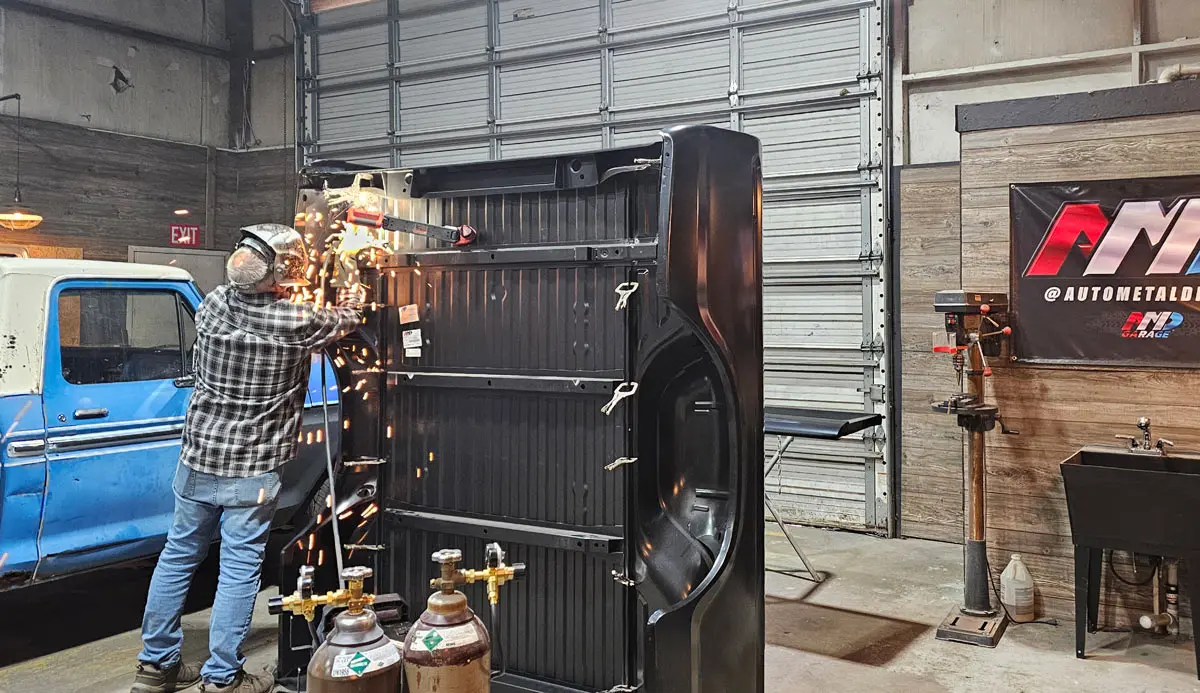
To replicate factory assembly, plug weld holes were drilled into structural components like cross sills rather than the visible bed floor. This approach results in a cleaner finish and reduces the chance of future corrosion.
Using a combination of MIG welding and resistance spot welding, the team secured the panels together with strength and precision. Spot welding, in particular, helped achieve factory-style seams with minimal cleanup.
Surface preparation also played a major role. Stripping the E-coat in weld areas and applying weld-through primer ensured proper penetration and long-term durability.
Frame Shortening and Chassis Prep
Converting a longbed Ford into a shortbed requires careful frame modification. Unlike some platforms, the frame rails on these trucks are not perfectly parallel, which adds complexity to the process.
The frame was cut and reinforced using proper fabrication techniques, including plated joints to maintain structural integrity. Precision measurements ensured the shortened chassis aligned perfectly with the new bed assembly.
Once complete, mounting holes were drilled and prepped for final installation.
Final Bed Installation
With the bed fully assembled, it was carefully lowered onto the chassis using an engine hoist. Proper balance and control during this step are critical to avoid damaging freshly assembled panels.
Thanks to accurate measurements and consistent panel quality, the bed dropped into place with minimal adjustment required. That’s a direct reflection of both the preparation work and the precision of AMD’s classic truck body panels.
The Importance of Supporting Components
While major panels get most of the attention, it’s the smaller components that complete the build. Hardware kits, brackets, and tailgate components all contribute to a finished, functional result.
Having access to correct, restoration-quality components eliminates guesswork and keeps the project moving forward without delays.
Real-World Insights from the Shop
After years of hands-on experience, builds like this reinforce a few key principles:
-
High-quality panels dramatically reduce fitment time
-
Accurate measurements are critical at every stage
-
Factory-style assembly methods produce better long-term results
-
Planning ahead simplifies final installation
Most importantly, this project proves that you don’t need to start with a rare shortbed to end up with a desirable truck.
Why This Build Matters for Enthusiasts
The Ford Dentside market continues to grow, and shortbed trucks remain highly sought after. By using premium Ford F100 replacement parts, builders can create the look they want without chasing hard-to-find originals.
AMD’s continued expansion into the Ford truck market gives enthusiasts access to the parts needed to take on ambitious builds with confidence.
Frequently Asked Questions
Can a Ford F-100 longbed be converted into a shortbed?
Yes. With proper planning, measurements, and fabrication, converting a 1973–1979 Ford F-100 longbed into a shortbed is a well-established process.
Are aftermarket panels reliable for Ford truck restoration?
When manufactured to OE specifications, high-quality panels provide excellent fitment and durability, making them a smart choice for restoration projects.
What’s the biggest challenge in a bed conversion?
Maintaining proper alignment and ensuring the frame modification is precise are the most critical aspects of the build.
Why use AMD panels for a Dentside build?
AMD panels are designed for consistent fitment and durability, helping reduce installation time and improve overall results.
Final Thoughts
This Ford Dentside shortbed conversion highlights what’s possible when experienced craftsmanship meets high-quality automotive restoration parts. With guidance from Kevin Tetz, PaintucationU.com, and support from Eastwood and AMD, this build serves as a blueprint for enthusiasts ready to take on their own project.
If you’ve got a longbed Ford sitting in the garage, this might be the push you need to turn it into something truly special.
Ready to Start Your Ford Build?
Explore Auto Metal Direct’s growing lineup of 1973–1979 Ford F-100 restoration parts and discover how the right components can transform your project from the ground up. Whether you're restoring, modifying, or building from scratch, quality parts make all the difference.
Related Articles
How to Build a Ford F100 Bed Assembly (1973–1979) with AMD Parts
Aug 26, 2025 by Jason
Tech Articles Videos
How-To with Classic Truck Performance | 67-72 Chevy Truck Build-A-Bed
Jan 8, 2025 by Jason
Tech Articles Videos
ALL NEW TRIM for your Mopar A-Body
Jan 3, 2025 by Jason
Tech Articles
Making an A-body Whole Again with Hard to Find Metal from AMD
Aug 29, 2024 by Jason
Tech Articles