


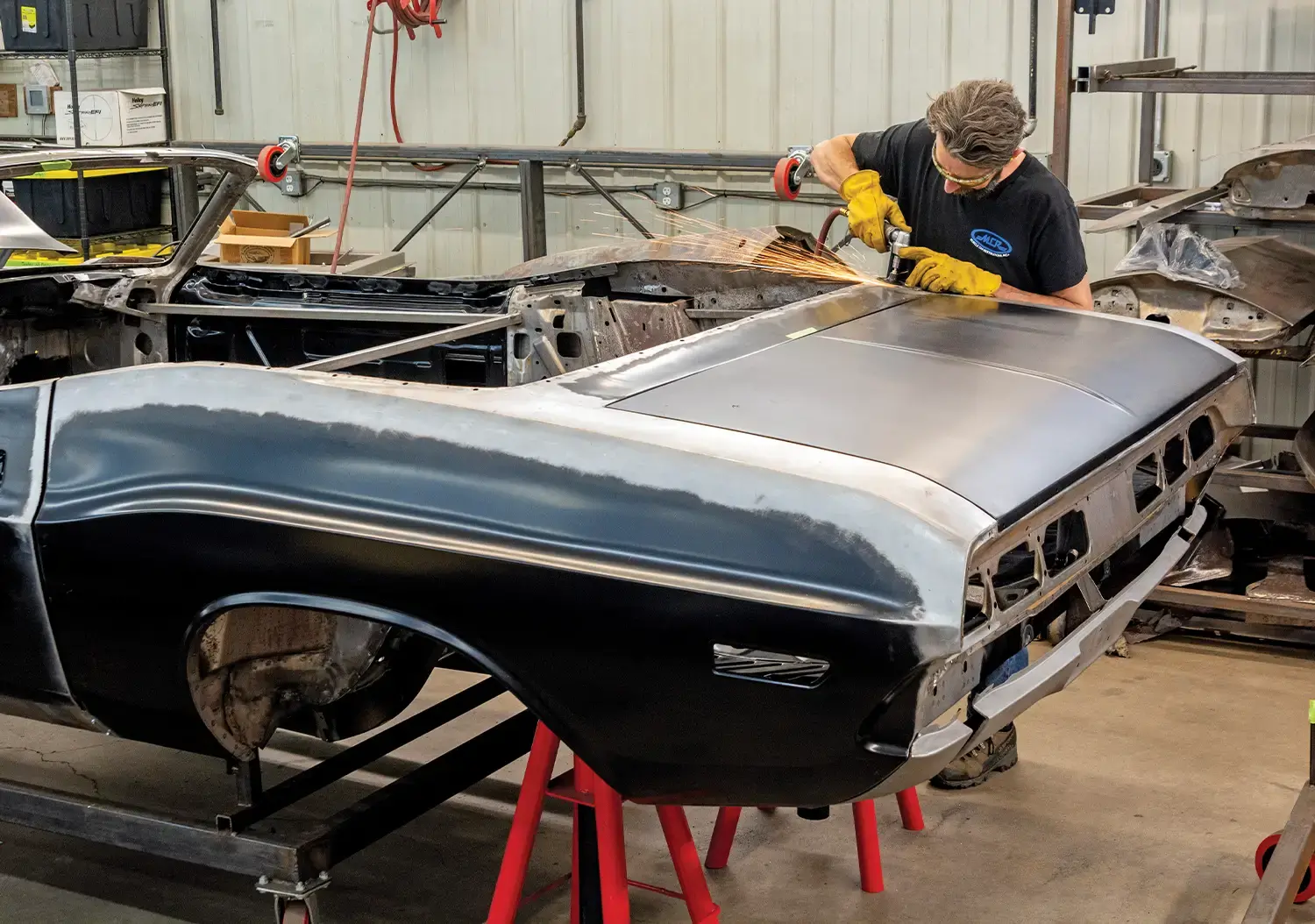
When the Part You Need Doesn’t Exist: Saving a 1971 Challenger Convertible the Right Way
When the Part You Need Doesn’t Exist: Saving a 1971 Challenger Convertible the Right Way

There’s never been a better time to restore a classic Mopar. With today’s tooling, advanced coatings, and precision-stamped automotive restoration parts, even severely rusted projects can be brought back to life with confidence. As highlighted in Modern Rodding Tech (Volume 7, Issue 66, 2026), author Mark Ehlen takes us inside Muscle Car Restorations (MCR) in Wisconsin to showcase a perfect example of what happens when the part you need simply isn’t available—and how experienced craftsmen bridge the gap using quality sheet metal from Auto Metal Direct (AMD). Click here for the Article
This feature centers on a 1971 Dodge Challenger convertible rear deck filler panel replacement, and it underscores an important truth in the restoration world: sometimes success depends not only on the availability of parts, but on the ability to adapt them.
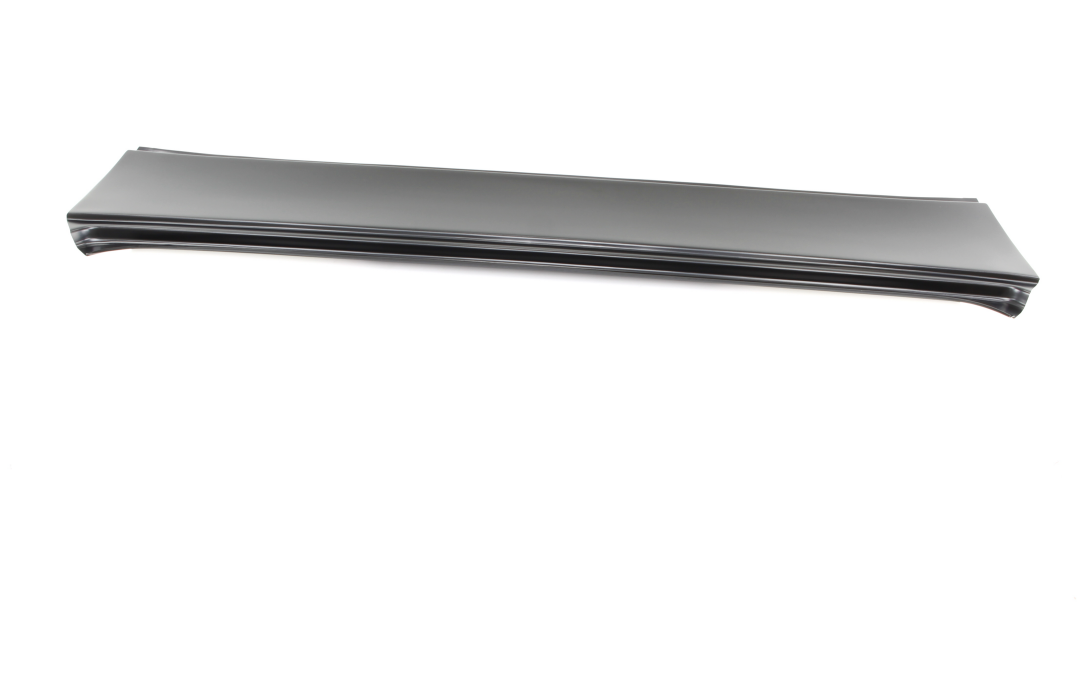
The Challenge: 1971 Challenger Convertible Rear Deck Filler Panel Replacement
The 1971 Challenger rear deck filler panel sits directly in front of the trunk lid and plays a critical role in both structural integrity and panel alignment. On hardtop E-body models, this panel follows a standard width and seam design. However, the convertible version is different—narrower in dimension and engineered to accommodate the structural changes required when the roof is removed.
Unlike many other 1971 Challenger replacement parts, the convertible-specific rear deck filler panel is not currently reproduced. Demand for this low-production variant has historically been limited, which makes full-scale manufacturing difficult.
So what happens when the original panel is missing or beyond repair?
According to MCR, you adapt.
Starting with Quality: Why AMD Restoration Parts Matter
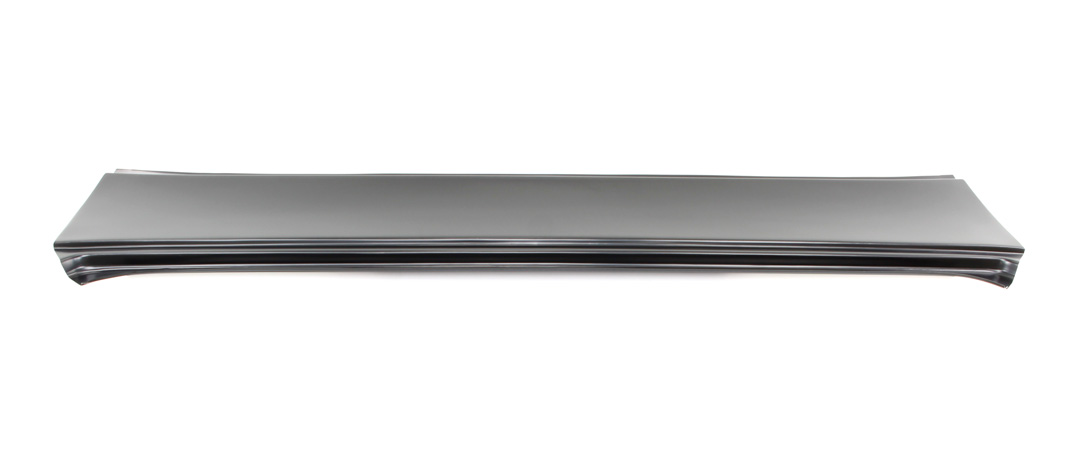
The foundation of this repair began with a high-quality 1971 Challenger hardtop rear deck filler panel from Auto Metal Direct. When modifying a panel to fit a convertible application, precision matters. Starting with accurately stamped classic car body panels ensures proper contours, correct metal thickness, and factory-style geometry.
This is where AMD sheet metal gives restoration shops an advantage. The closer a reproduction panel matches OE specifications, the easier it is to reshape, trim, and refine for specialized applications.
In this case, the hardtop panel provided the correct curvature and surface profile. The primary difference was width—and that’s where fabrication expertise came into play.
Convertible vs. Hardtop: Understanding the Differences
E-body convertibles differ from hardtops in several subtle but critical areas:
-
Flat-topped wheelhouses to accommodate the folding convertible top
-
Reinforced structural sections throughout the body
-
Narrower rear deck filler panel with unique seam treatment
On hardtops, the filler panel typically features a visible seam. On convertibles, that seam was originally leaded smooth at the factory, creating a seamless appearance between the quarter-panel and filler panel.
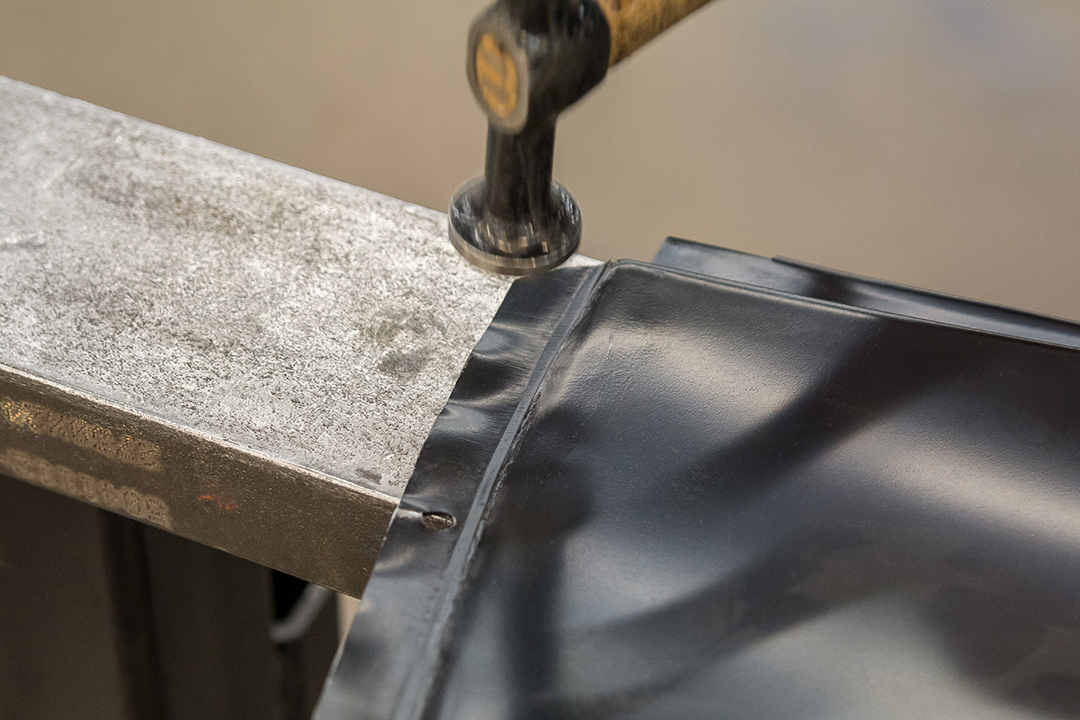
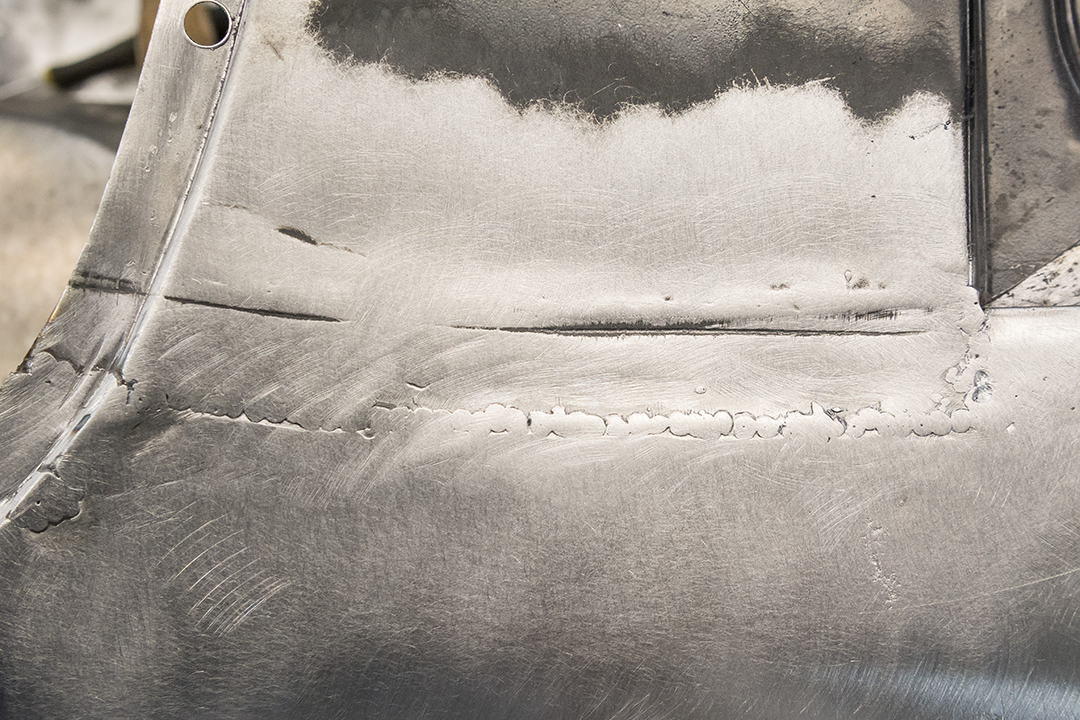
When adapting the hardtop panel for this 1971 Challenger convertible restoration, MCR trimmed the width to match the original dimensions. Rather than replicate the factory leaded seam, they opted for a fully welded butt seam, eliminating filler material and creating a stronger, more permanent bond.
This approach not only improves long-term durability but also reduces the risk of seam cracking—a known issue with leaded joints over time.
Precision Fitment: Setting Gaps the Right Way
One of the most important lessons from this project is the order of operations.
Before any trimming occurred, the new trunk lid was installed and properly aligned. This allowed MCR to:
-
Establish consistent trunk-to-panel gaps
-
Clamp the filler panel into its exact position
-
Scribe accurate trim lines using the underlying brace as a guide
Because the filler panel sits flush on a trunk brace, that brace served as a reference point for final width adjustments.
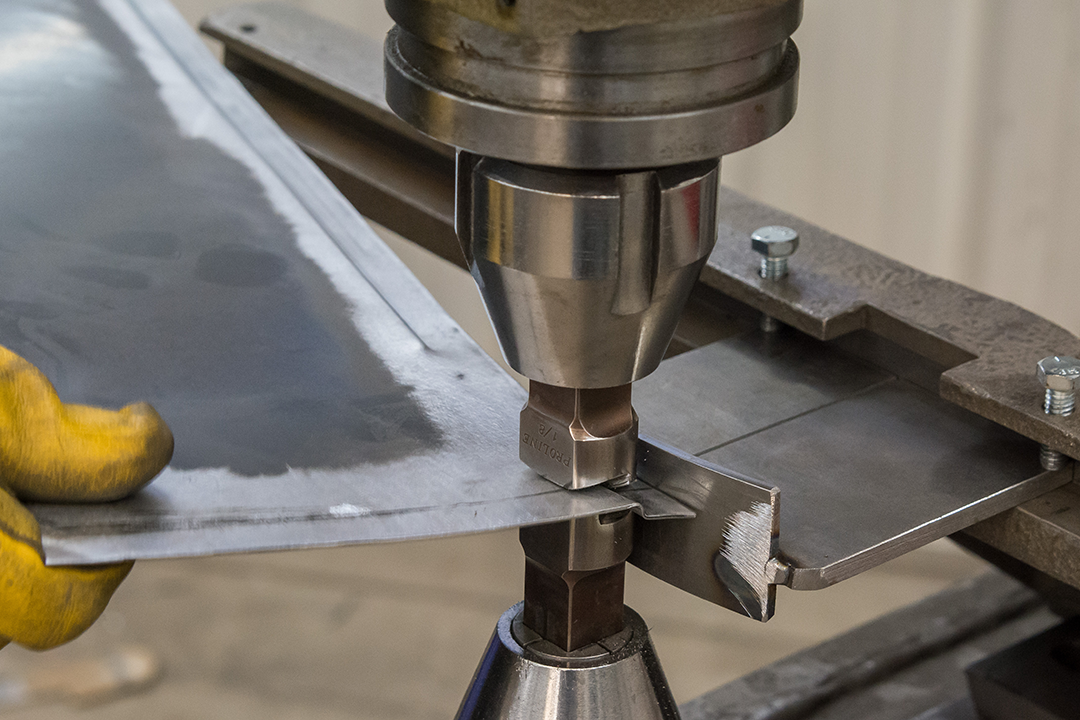
Once trimmed, the panel edge was reshaped using metal-forming equipment to recreate the stepped profile needed for proper alignment. Tools such as a Pullmax machine or bead roller allow shops to create factory-style contours while maintaining structural integrity.
The result? A panel that looks engineered specifically for the convertible—even though it started as a hardtop component.
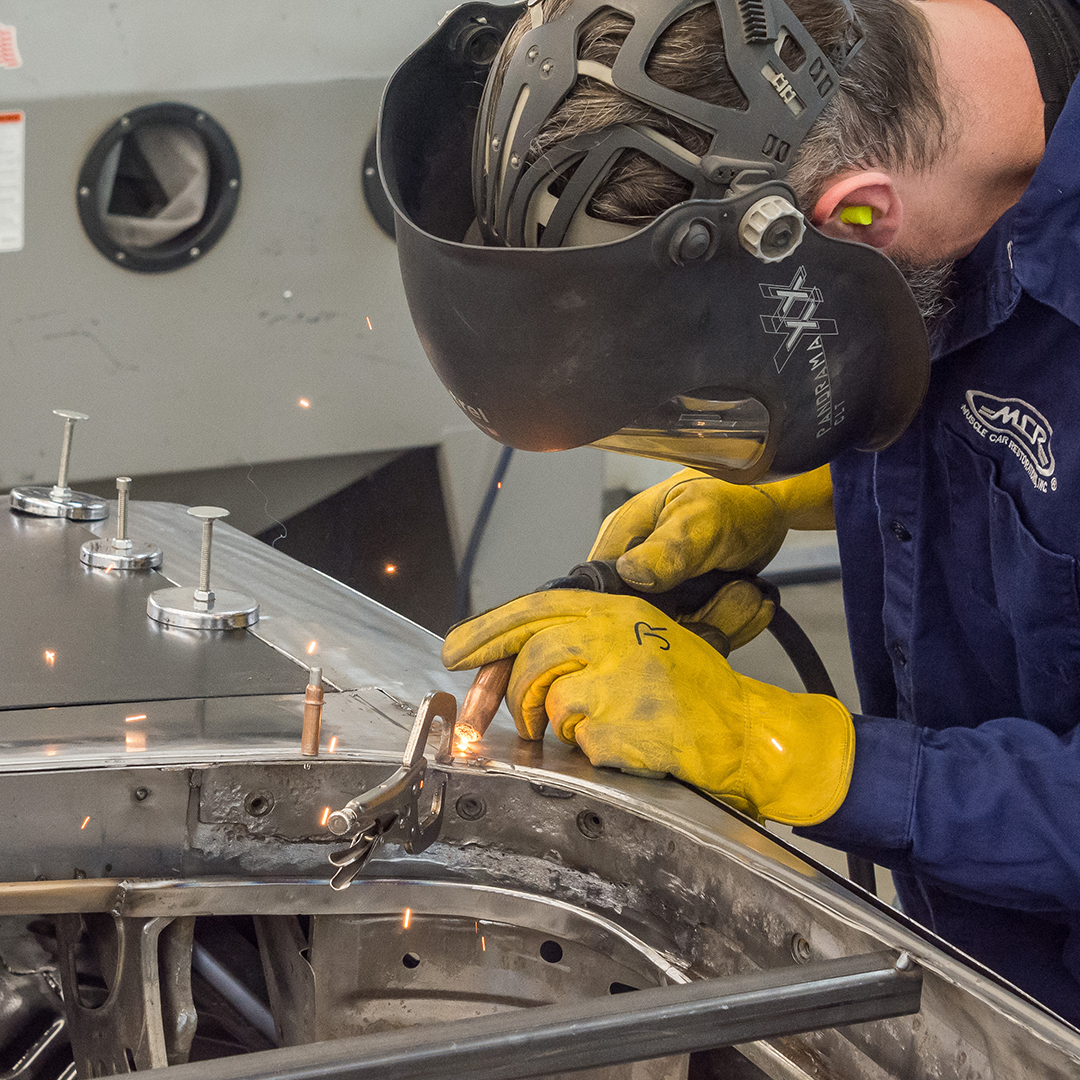
Welding Strategy: Strength and Longevity
Another key takeaway from this 1971 Challenger rear deck filler panel replacement is weld methodology.
MCR removed the existing quarter-panel lip before installing the new panel. This step prevents moisture traps and eliminates areas where corrosion could return in the future.
By performing a clean butt weld along the seam, they achieved:
-
Increased structural strength
-
Improved corrosion resistance
-
A completely seamless final appearance
Spot welds were used where appropriate to maintain a factory-correct look. In areas where spot welding wasn’t possible, plug welding provided a strong alternative.
Once ground and finished, the seam becomes invisible—yet far stronger than the original leaded configuration.
Why This Matters for Mopar Restorations
Projects like this highlight the real-world side of Mopar restoration. Even with the extensive catalog of 1971 Challenger replacement parts available today, there are still rare scenarios that require craftsmanship beyond bolt-on installation.
However, the availability of correctly stamped automotive restoration parts—especially major structural components and classic car body panels—makes these adaptations feasible and efficient.
Without access to a properly formed hardtop rear deck filler panel, this modification would require full scratch fabrication, dramatically increasing labor time and cost.
Instead, starting with AMD sheet metal allowed MCR to:
-
Preserve original body lines
-
Maintain correct trunk geometry
-
Achieve factory-quality results
-
Strengthen the structure beyond OE design
This is the kind of flexibility that keeps rare Mopars on the road.
The Bigger Picture: Restoration in 2026
As Mark Ehlen notes in the Modern Rodding feature, we are living in a golden era of restoration. The depth of available tooling and manufacturing technology means even heavily deteriorated E-body shells can be revived.
Rust remains the primary enemy. Once a car is chemically stripped and evaluated in bare metal, hidden damage often reveals itself. Having dependable sources for major panels—quarter-panels, trunk floors, deck filler panels, and structural reinforcements—is critical to maintaining project momentum.
Shops like Muscle Car Restorations rely on high-quality reproduction components not only for efficiency but for accuracy. Proper panel geometry affects:
-
Trunk lid alignment
-
Quarter-panel fitment
-
Rear glass sealing
-
Overall structural rigidity
When each piece works together as intended, the final result looks—and performs—like a factory-built vehicle.
When the Exact Part Isn’t Available
If you’re tackling a 1971 Challenger convertible restoration and discover the rear deck filler panel is missing, here are the key takeaways from this project:
-
Start with the best available reproduction panel—accuracy matters.
-
Install and align adjacent components (like the trunk lid) before trimming.
-
Use underlying braces as reference points for fitment.
-
Prioritize welded seams over filler materials for strength and longevity.
-
Eliminate moisture traps during installation to prevent future corrosion.
Even when a convertible-specific panel isn’t reproduced, a properly stamped hardtop panel can serve as an excellent foundation.
Preserving Mopar History with the Right Partners
Muscle Car Restorations continues to demonstrate what’s possible when craftsmanship meets high-quality components. Their ability to adapt a 1971 Challenger hardtop rear deck filler panel into a convertible-ready solution showcases the importance of both skilled fabrication and dependable manufacturing.
Auto Metal Direct remains committed to expanding its Mopar catalog, continually investing in tooling and development to support enthusiasts restoring E-body platforms, including 1970–1974 Challenger and Barracuda models.
If you’re restoring a 1971 Challenger—convertible or hardtop—choosing premium automotive restoration parts ensures the best possible foundation for your build.
Explore available 1971 Challenger replacement parts at AutoMetalDirect.com or call (833) 404-4777 for expert assistance.
About Auto Metal Direct
Auto Metal Direct is a leading manufacturer of premium classic car body panels and automotive restoration parts for American muscle cars and classic trucks. Known for precision tooling and OE-style accuracy, AMD supports restorers nationwide with high-quality sheet metal solutions engineered to meet or exceed original specifications.
About MCR
Related Articles
ALL NEW TRIM for your Mopar A-Body
Jan 3, 2025 by Jason
Tech Articles
Making an A-body Whole Again with Hard to Find Metal from AMD
Aug 29, 2024 by Jason
Tech Articles